
September is the best month to plant trees, shrubs, and perennials in North Texas. The soil is still warm enough for fast root growth while the air finally cools. New plants get 8 to 10 weeks to establish before the first freeze in mid to late November. Most homeowners plant in spring because garden centers tell them to. Spring works in Ohio. In Tarrant County, a tree planted in April gets about 90 days of mild weather before 100-degree heat arrives. It faces that heat with a root system still in shock. The same tree planted in September gets fall, winter, and a full spring to build roots before its first Texas summer. Nurseries and landscape crews across Fort Worth and the Mid-Cities call fall the second growing season for a reason. This guide explains the science, what to plant when, and how to line up a September installation now.
Warm Soil Plus Cool Air Is the Whole Secret
Roots grow by soil temperature, not air temperature. North Texas soil holds 70 to 80 degrees deep into October, which is prime root-growing range. September air temperatures, meanwhile, finally drop out of the 100s. That combination lets a new planting push roots aggressively without the moisture stress that summer heat puts on leaves. Research from Texas A&M AgriLife backs the pattern: woody plants establish faster from fall planting than from spring planting in most of Texas.
The clay soils common in Keller, North Richland Hills, and Colleyville add one more argument. Clay stays workable in fall, while summer baking turns it to brick and spring storms turn it to mud. Fall bed preparation, with compost and expanded shale tilled 6 to 8 inches deep, is simply easier to do well.
What to Plant in September and October
Early fall suits almost every permanent plant in a North Texas landscape:
- Shade and ornamental trees: live oak, cedar elm, Mexican plum, and crape myrtle anchor a design and gain the most from a long establishment window.
- Shrubs: dwarf yaupon holly, abelia, Texas sage, and boxwood settle in before winter and flush hard in spring.
- Hardy perennials: salvia greggii, lantana, ornamental grasses, and black-eyed Susan divide and plant well now.
- Turf: Bermuda and Zoysia sod laid by mid-September roots down before dormancy.
- Cool-season color: pansies and violas join the party in October once nights cool.
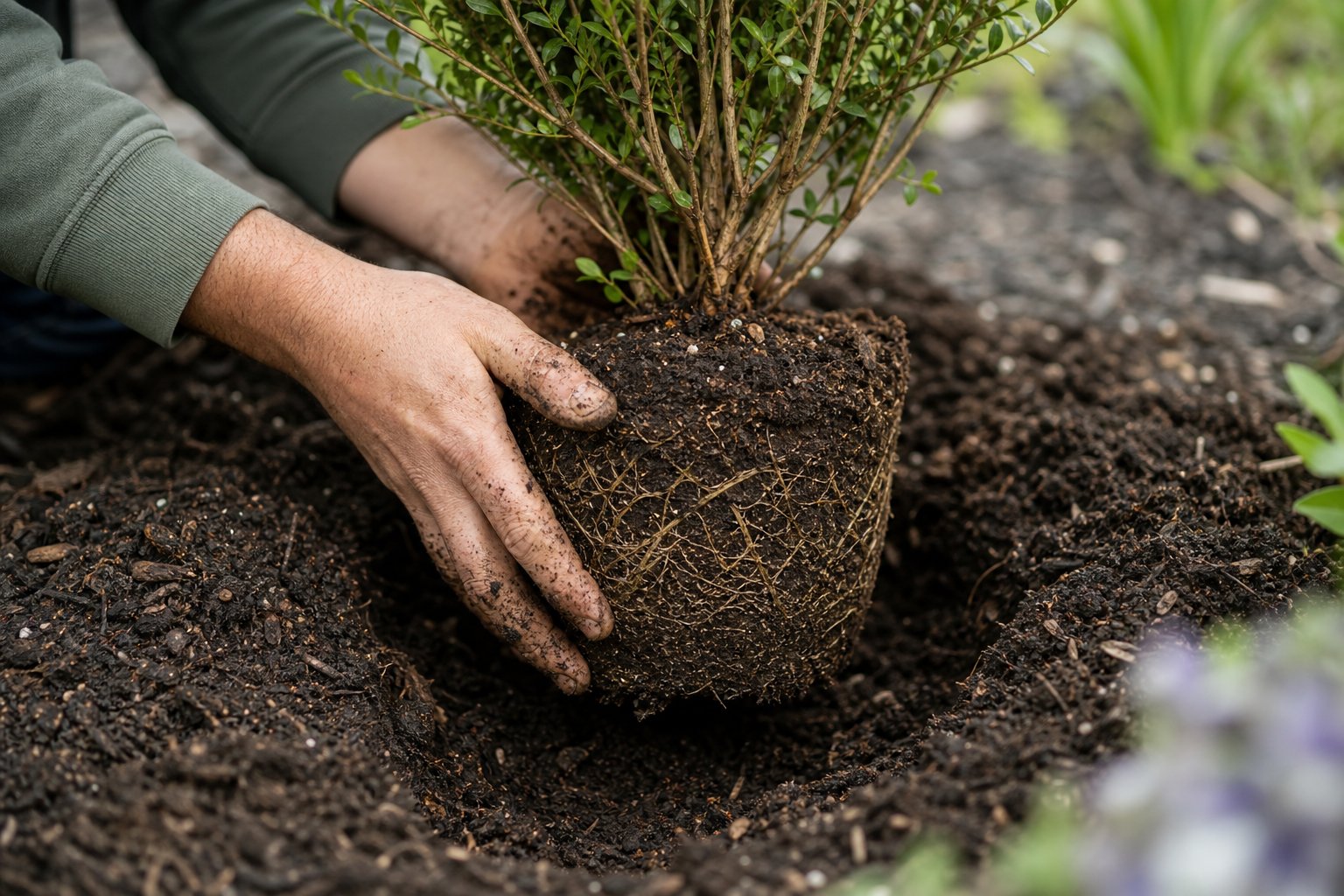
Can you still plant during a hot early September?
Yes, with water discipline. Early September in Grapevine or Flower Mound can still hit the upper 90s. Nights cool fast, though, and the soil moisture equation already favors new plants. Water new plantings deeply at installation, then every two to three days for the first month, tapering as temperatures fall. A drip line on a smart controller handles this automatically and stays inside city watering rules. Most schedules exempt hand watering and drip for new landscapes.
The Fall Planting Timeline That Actually Works
Fall installation rewards planning because the good weeks go fast. A realistic schedule looks like this:
- Late August: design consultation, plant selection, and bed layout while installers still have September slots.
- Early September: bed preparation, soil amendment, and irrigation adjustments.
- Mid-September through October: trees, shrubs, and perennials go in the ground.
- October: cool-season color, mulch top-off, and controller reprogramming for fall.
- November: final deep watering rhythm set before the first freeze window arrives.
Ellis Landscape Services runs this exact sequence across its Tarrant County service area every fall, and September installation calendars fill by Labor Day most years. Booking a design visit in August is the difference between planting this fall and waiting for spring.
North Texas Fall Planting FAQ
Why is fall planting better than spring planting in North Texas?
Fall-planted trees and shrubs get 8 to 10 weeks of root growth in warm soil before the first freeze. A full cool season to establish follows. Spring plantings face triple-digit heat within 90 days, before roots can support the plant. Fall plants enter summer already anchored.
When is the first freeze in North Texas?
The average first freeze across Tarrant County falls in mid to late November. Planting in September gives woody plants roughly 10 weeks of active root development before that date. Soil stays warmer than air well into December, so roots keep growing after the landscape looks dormant.
What should be planted in September in North Texas?
September suits shade trees, ornamental trees, evergreen and flowering shrubs, and hardy perennials like salvia and Texas sage. October adds pansies and cool-season color. Sod also establishes well in early fall. Tender tropicals are the exception, since they cannot ride out a winter.
Does Ellis Landscape Services install fall landscapes across Tarrant County?
Yes. Ellis Landscape Services designs and installs complete landscapes across Fort Worth, Keller, Southlake, Grapevine, and the rest of its 12-city service area. Fall installation slots fill quickly, so design consultations booked in late August secure September and October planting dates.